According to the Eclipse Calculator, the Solar Eclipse started at 18:22, and maximum 86% coverage was at 19:29. Using the Photographer's Ephereris, the sunset was scheduled for 20:14 at 297.9° ... but with the mountains, it would be earlier and slightly to the South ... so I setup at the bus stop at Niwot road & 287 - 40.102°N/105.103°W which provided a sight-line of 292.6° with 289° measured on my compass. Turns out when the sun touched the mountains at 19:54 it was slightly North of Longs Peak ... but this turned out to be a good thing because the sun barely came out of the clouds and I would have been skunked if I had been located any further South.
Yea, I'm an engineer, so fun to try to analyze these infrequent events -
here's an example with the rising moon. Ironically, my Uncle
was a Solar Astronomer and my Dad flew instrument laden planes that "chased" eclipses to extend the totality time.
UPDATE: Pictures/video from the 2017 Total Solar Eclipse near Tryon, Nebraska!!!
Here's the view I had of the May 20th, 2012 partial Solar Eclipse
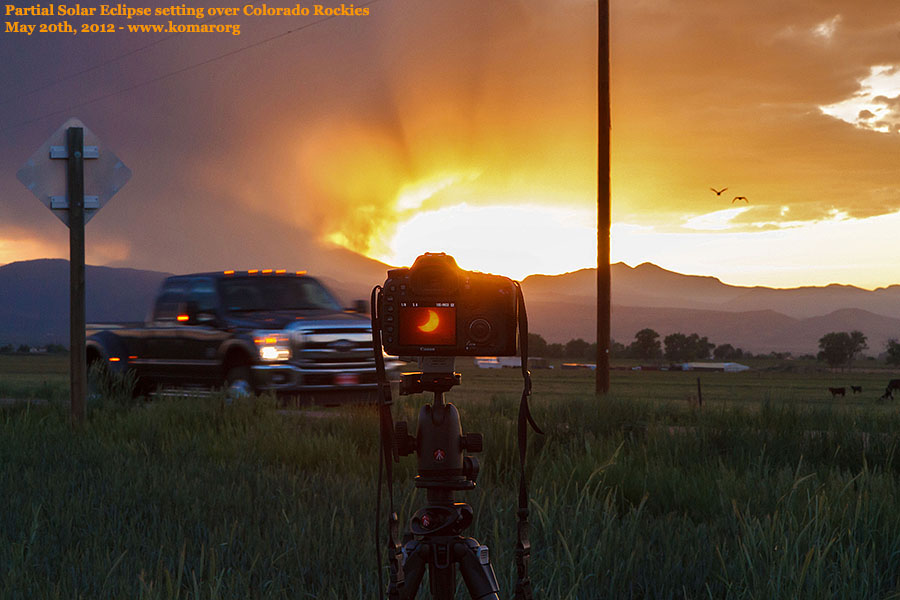
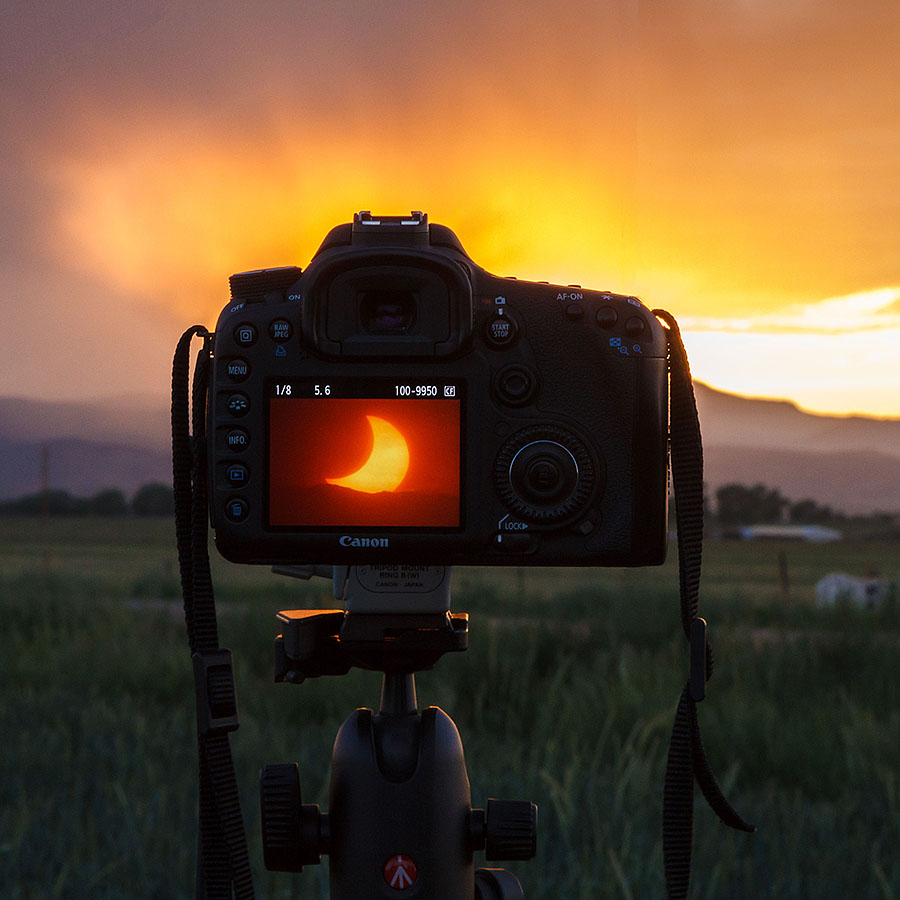
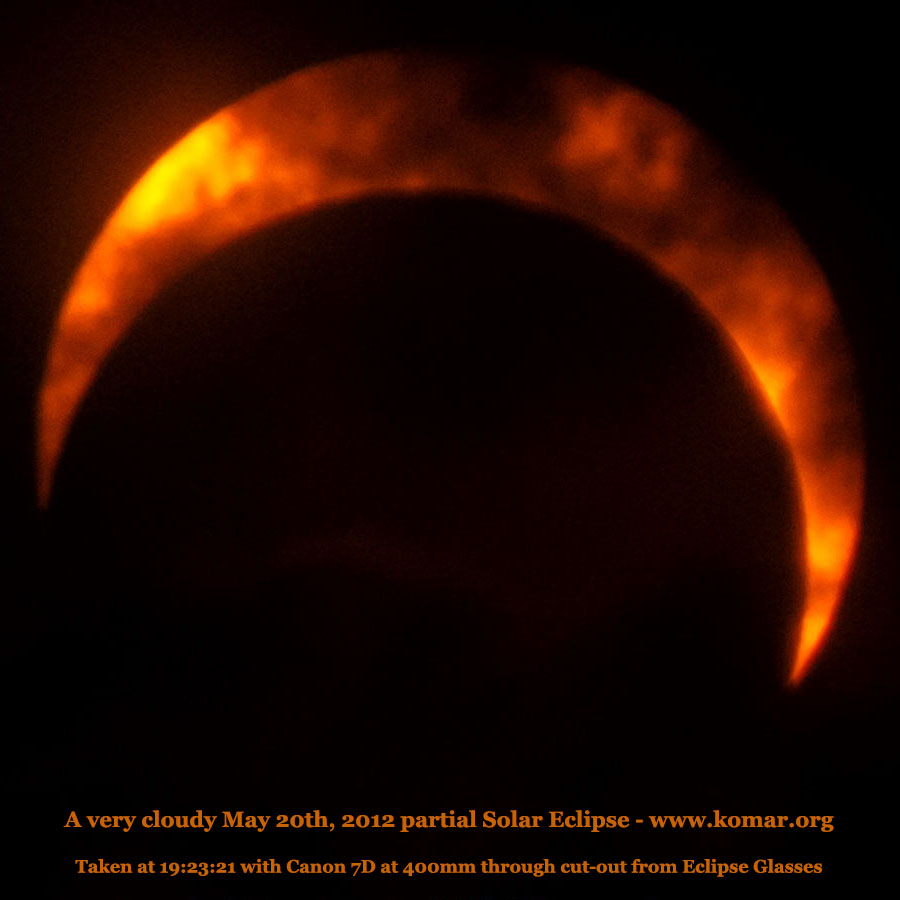
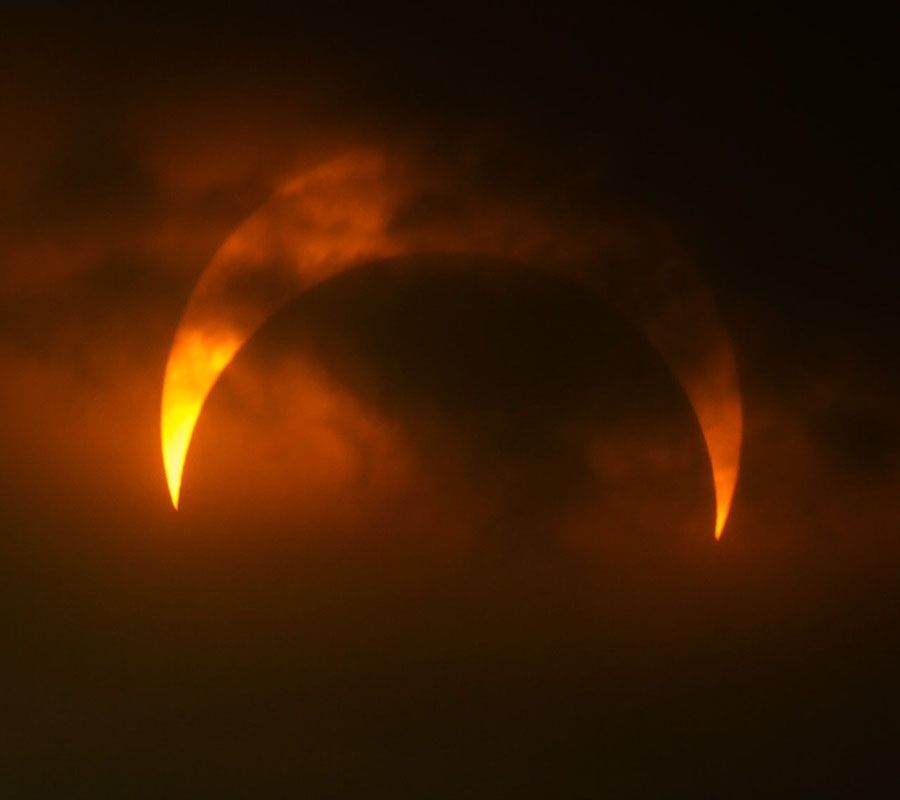
Pictures at 19:23:31 & 19:20:56 - close to maximum obscuration with clouds contributing even more!
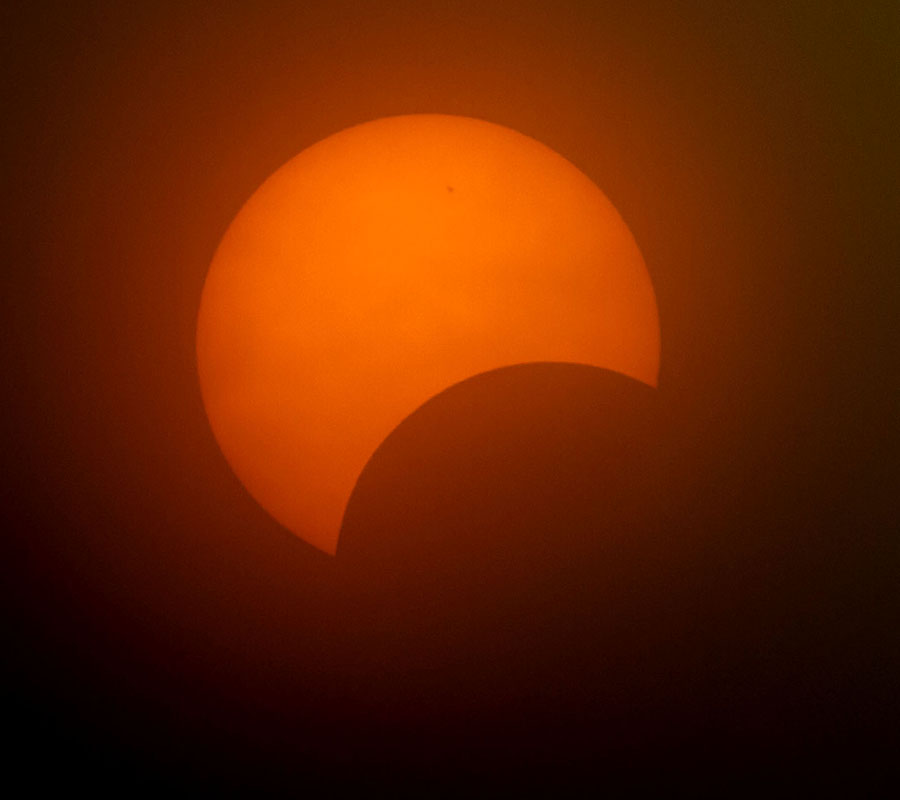
Picture taken from my backyard at 18:51:19 after the Solar Eclipse has begun
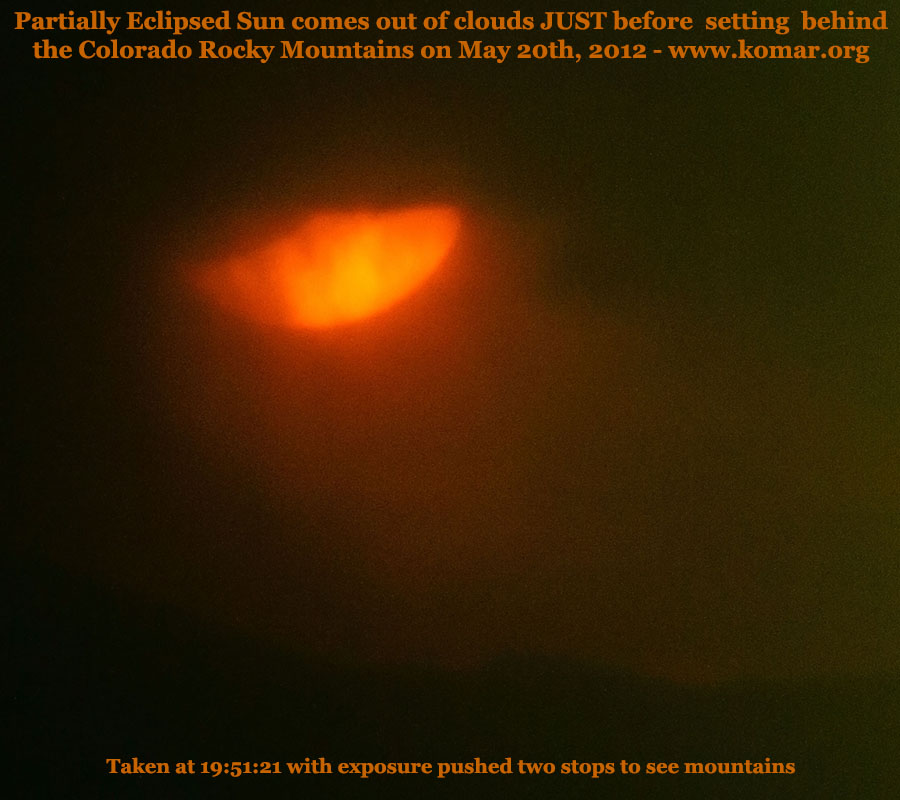
Sun comes out of the clouds at 7:51:21 just above the Colorado Rockies
It "touched" the mountains at 7:54:33 and was gone by 7:57:45
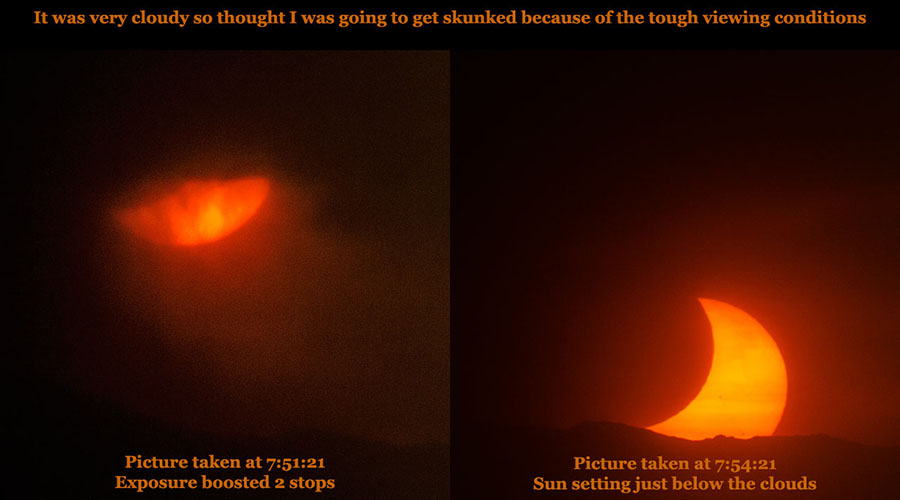
Irfan was used to add the timestamp on the images and Photoshop CS6 was used to generate a video from the image sequence.
IRFanview was used to time-stamp and label the JPEG's.
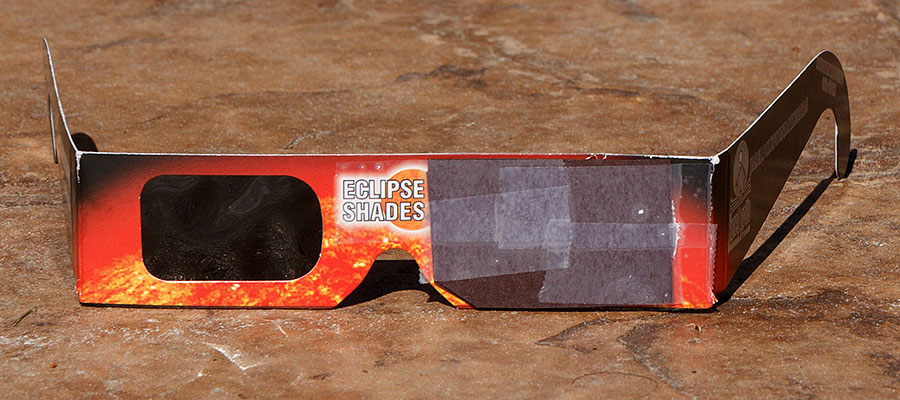
My son's eclipse glasses ... after I cannibalized 'em! ;-)
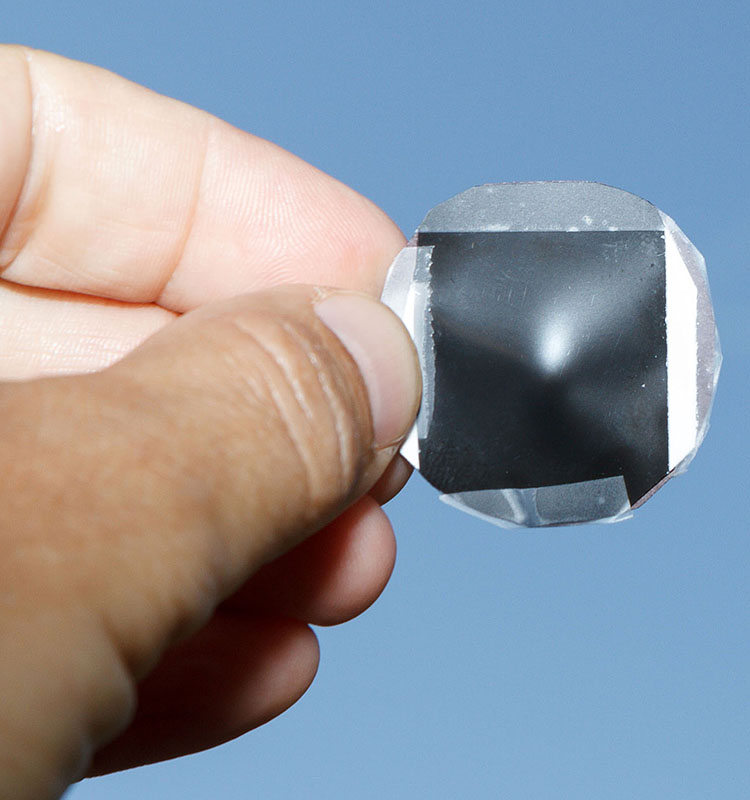
Right eye from the eclipse glasses taped on circular cut-out
View of the 2xTC on the end of the 70-200/F2.8 lens
Normal and inserting the makeshift ND filter!
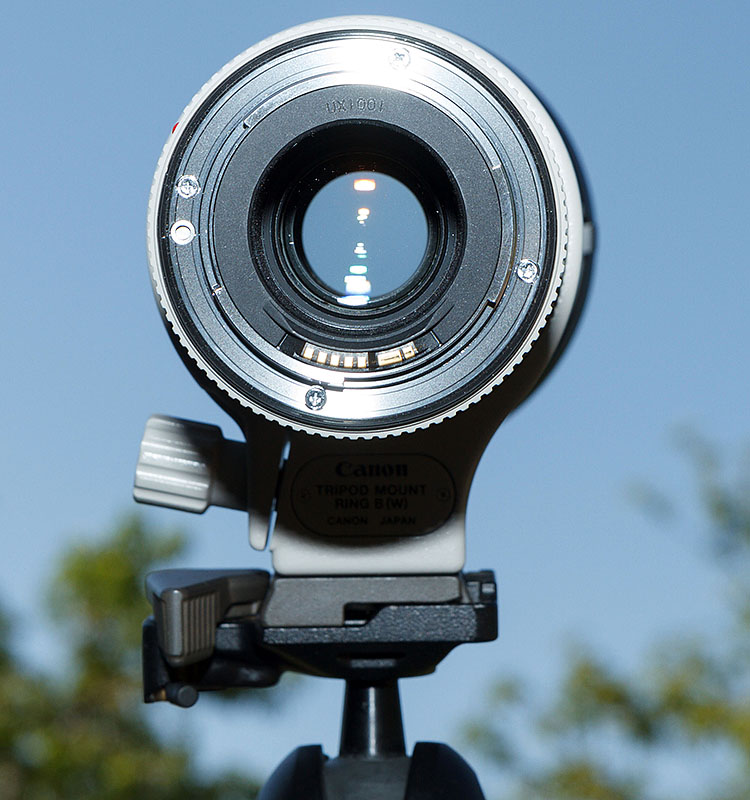
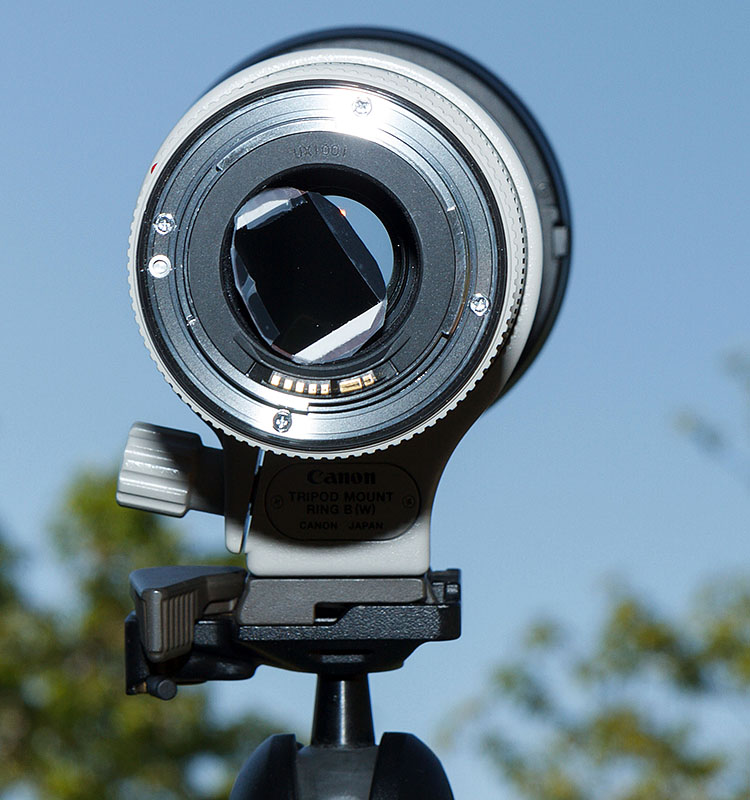
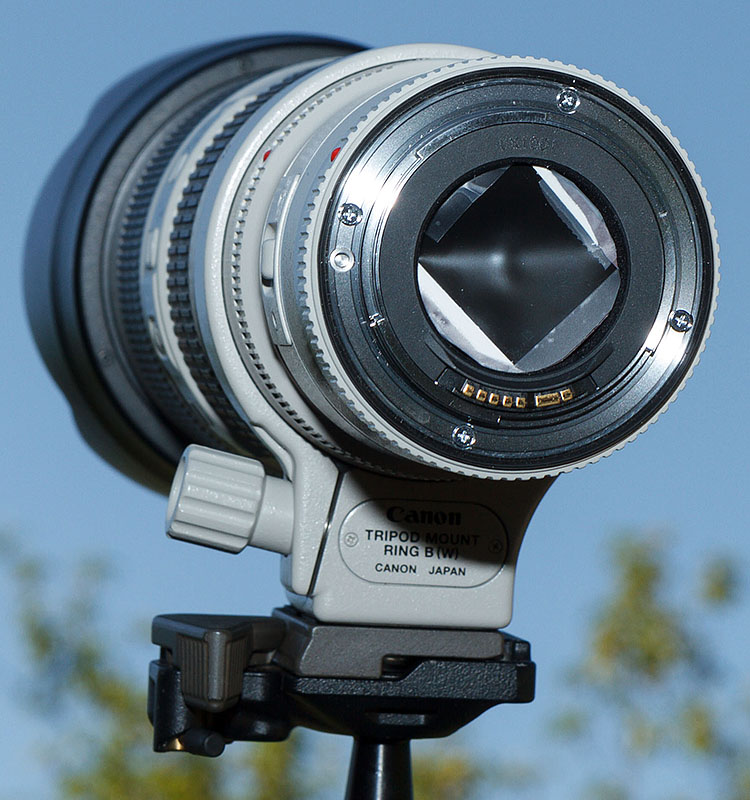
It's a good thing I wasn't tracking the eclipse'd sun when it was higher in the sky (less atmosphere and occulation) for an extended time as I could have had a melted eclipse filter inside my lens ... :-(
Normal Sky Exposure at ISO400, F/5.6, and 1/800s
Mouseover image to see with makeshift ND filter at 1 second exposure - 10 stop difference!